Virtual Tours for Stakeholder Review: Sharing a 3D Room Before It's Built
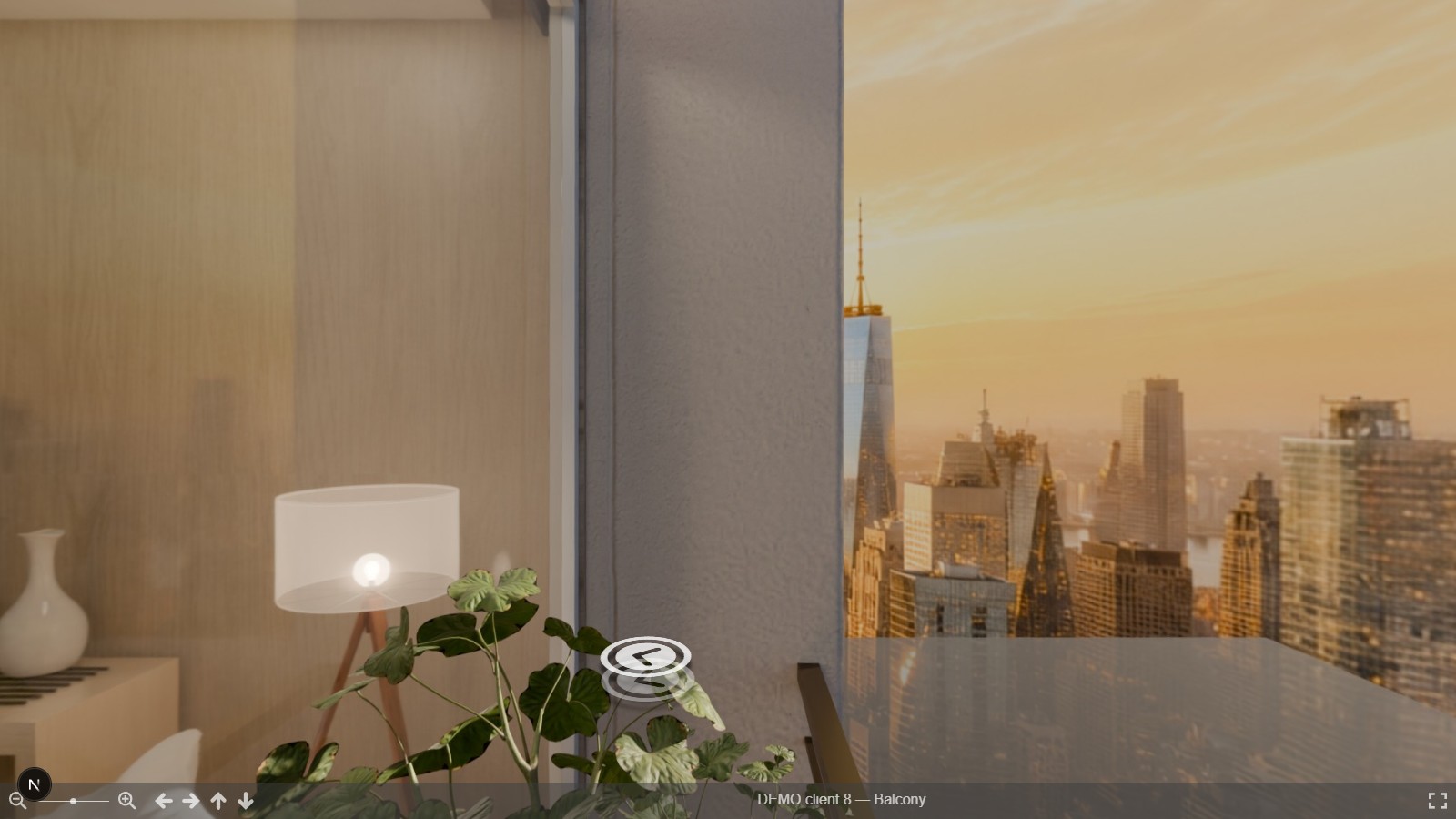
A design review used to mean a deck of rendered stills and a stakeholder trusting that the angles chosen were representative of the whole room. A shareable, walkable panorama tour removes that trust requirement entirely — the stakeholder looks around themselves, and there's nothing left for a curated angle to hide. The room either holds up when someone can see all of it, or it doesn't, and a tour is the format that actually tests that rather than assuming it.
Why a walkable tour gets faster sign-off
A still render is chosen by whoever produced it, from the single angle that presents the room best. That's not dishonest, but it does mean a stakeholder approving a still is approving one curated view, not the room. A walkable tour removes the curation: the viewer controls the angle, which means what gets approved is the actual space, not a selected representation of it. That difference shows up directly in review speed — sign-off on a still often comes with a request for more angles or an in-person visit; sign-off on a tour a stakeholder already explored themselves usually doesn't need either.
That cycle time difference compounds across a project with multiple stakeholders. Each round of "can I see it from another angle" or "I need to see it in person before I decide" adds days, and it adds them per stakeholder — a project with three or four people who each need convincing pays that cost three or four times over. A tour that answers the question the first time it's opened collapses that entire cycle into a single review.
What a stakeholder actually needs to judge
Three things a still image structurally can't show, and a walkable tour can.
Scale — whether the furniture and the room read as proportionate to an actual person standing in it, not just correctly labeled with dimensions on a floor plan. A room can measure correctly and still feel cramped or oversized in a way only standing in it, even virtually, reveals.
Materials across angles — a finish photographed or rendered from one flattering angle can look completely different from another; a stakeholder judging a material choice from a single still is judging that one angle, not the material.
Lighting as experienced, not staged — whether a space feels naturally lit the way a real room does, or lit specifically to make one still look good. A walkable tour exposes lighting quality from every angle a viewer chooses to check, not just the one it was optimized for.
None of these three is something a stakeholder would articulate as a formal requirement before a review — nobody asks for "multi-angle material verification" going in. They show up as a vague sense that something's off, or as a request to see more angles, without the reviewer necessarily being able to name why. A walkable tour resolves the vague version of the concern directly, because the viewer answers it themselves by looking, instead of needing to formulate the question first.
How POV placement affects trust
A viewpoint placed at natural standing eye height, with real clearance from every wall, reads as an honest representation because it's exactly where an actual visitor would stand. A viewpoint deliberately chosen to showcase one flattering corner while a viewpoint that would reveal a cramped adjacent space is conspicuously absent reads as staged the moment a stakeholder notices the gap — and a stakeholder evaluating a significant spend usually does notice. The same placement discipline that makes a panorama capture technically correct is also what makes it trustworthy to the person deciding based on it.
This is also why POV selection deserves the same care as the room itself, not an afterthought once the styling is done. A well-built, well-styled room shown through a poorly chosen viewpoint can still undersell itself — a viewpoint too close to a wall, or one that happens to frame a transition point rather than the room's actual center, makes an objectively good space read as awkward. The viewpoint is part of the pitch, not just a delivery mechanism for it.
Sharing mechanics
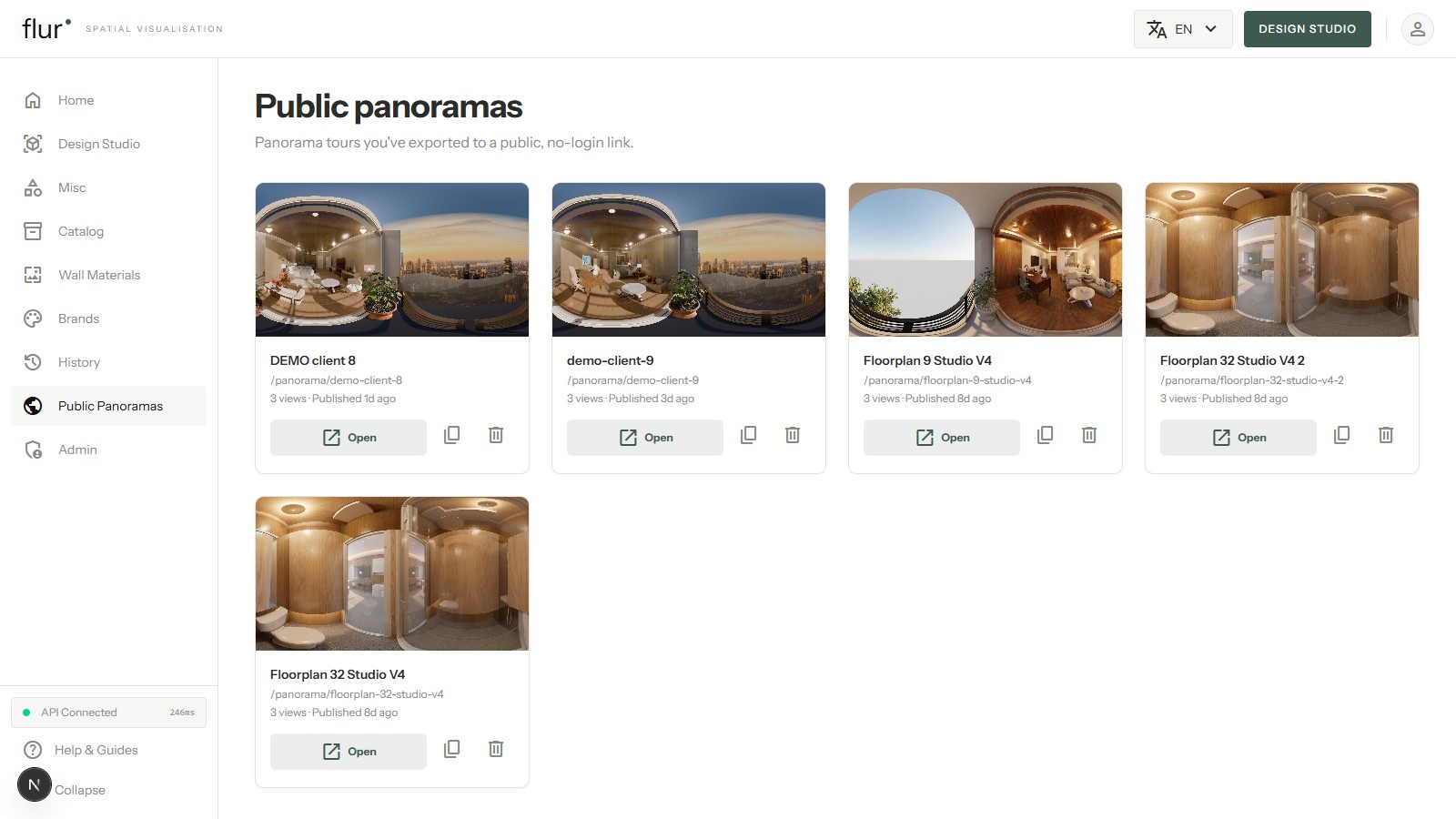
A published tour is a link to a page — no login, no software to install, opens directly in a browser on desktop or mobile. That's a deliberate design choice, not an afterthought: the entire value of removing the trust requirement around a curated still disappears if seeing the actual room requires jumping through an access hurdle first. A stakeholder should be able to open the link exactly the way they'd open any other page someone sent them. Anything more than that — a required account, a downloaded app, a plugin — reintroduces friction at exactly the step meant to remove it, and friction at that step is often enough to make a stakeholder default back to asking for a still image they can just glance at instead.
Getting started
For the projection and capture mechanics behind the tour format itself, see equirectangular panorama capture, explained. For how this fits into a hotel program's buying decision specifically, see AI floor plan software for hotel design teams: a buyer's checklist. And for the retail-vertical version of the same pitch-before-you-build case, see 3D floor plan software for retail store design teams.
See how it works or request early access to publish a shareable tour of your own room.